Applications before products.
- Chose
- Five families, each explaining where the light goes.
- Instead of
- A product-code catalogue mirroring the old PDF.
- Trade-off
- Returning buyers lose their familiar entry point, which is why the crosswalk exists.
Lambert makes architectural lighting in Rhode Island. I rebuilt its website into a fast, specification-ready catalogue: 13 generated pages, a WebGL light field, side-by-side spec tables and file requests that arrive pre-filled, with no framework and a locked-down security policy.
The website and online catalogue for an architectural lighting manufacturer, used by architects, lighting designers and specifiers to choose fixtures and request IES, LDT, Revit and cut-sheet files.
The visual design and a refined logo, the catalogue architecture, a custom static site generator, a WebGL lighting field, comparable specification tables and the pre-filled request workflow.
It treats a B2B catalogue as a working tool: application-first navigation, specs side by side, and a lean static build that is fast, checkable and hard to attack.

The opening: a luminous field, restrained navigation and a direct route into the product range.
Delivered scope of the rebuilt site.
The main navigation starts with grazer, cove, downlight, suspended linear and wall wash. Each family explains where the light goes before asking anyone to compare product codes.
Step 1 · Start with the application
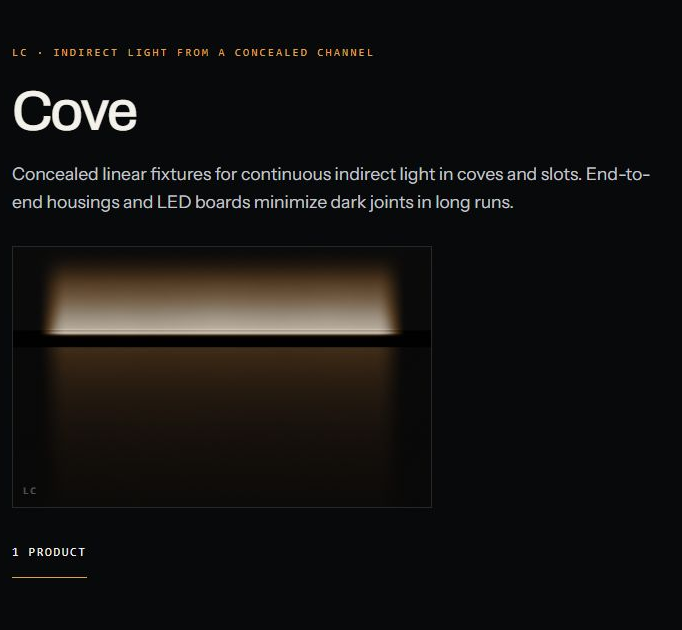
Desktop detail of the Cove lighting stage.
Step 2 · Compare in one table
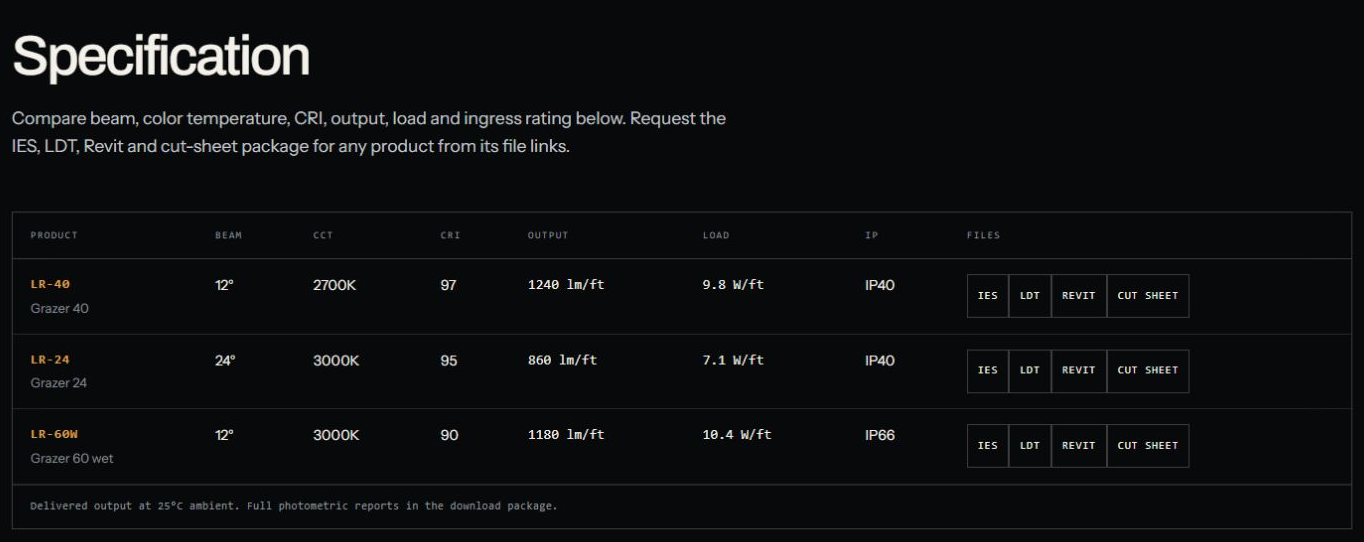
Product values shown belong to the supplied catalogue data.
Step 3 · Request without retyping
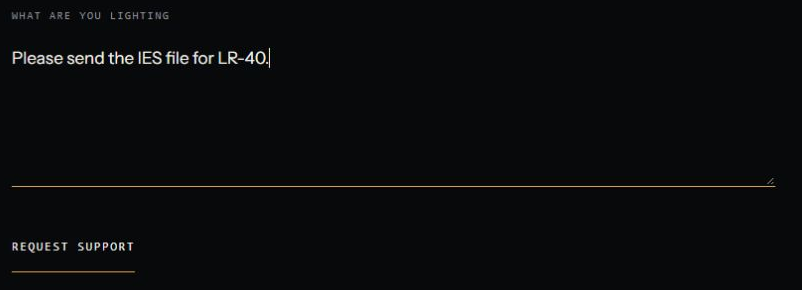
The delivered request workflow.
Returning buyers know the old catalogue names. Rather than break that habit, a crosswalk sends every familiar term to the right application family.
Examples from the 14-term category crosswalk. The application families are the main route; the old words remain a way in.
Families, configurations, project content and legacy mappings live in one versioned content file. A custom generator turns them into static pages, specification tables, contextual request links and product metadata, so a new configuration uses the existing structure instead of another hand-built page.
Build checks catch missing families and product codes, wrong heading counts, and images without dimensions or alternative text. Gallery code loads only on pages that use a gallery.
One catalogue model
Fails the build
A catalogue does not need a heavy framework. Every page is pre-built HTML, the only scripts are first-party bundles, and the browser is told exactly what it may load.
The request flow and browser validation were delivered ready for Lambert’s team to connect to their inquiry system.
The next product addition is a content entry, not another design exercise.
Working on a product catalogue? Start a conversation
All projects ↗Available for select projects and opportunities
Let’s work together. Have a project in mind or a role you’re hiring for? I’d like to hear about it.
Nothing opened? Use Copy address and paste it into your email app.